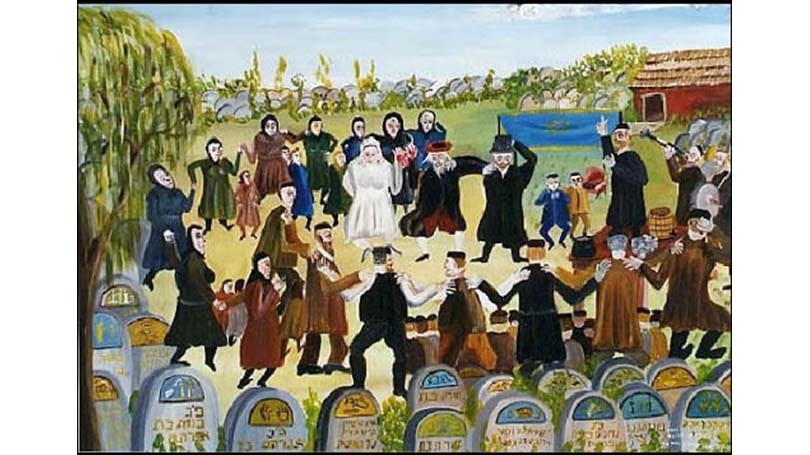
In her essay "Wedding in a Cemetery: Judaism, Terror, and Pandemic" (The Immanent Frame: Secularism, Religion, and the Public Sphere), Religion Professor Susannah Heschel discusses the wedding in a cemetery - shvartze chasene, in Yiddish - that East European Jews sometimes organized when cholera, typhus, influenza, and other epidemics would strike. The lesson Professor Heschel takes from this tradition? "All the rational advice of doctors, epidemiologists, and virologists is not sufficient. Racial terror and the terror of mass death are also epidemics needing our attention. There is one cure for the epidemic of fear: justice, the assurance that we live in a society rooted in moral values, that health is the concern of all, that everyone's family is secure and will never be abandoned, but always cared for, and that all human beings are equally precious."